Table of Contents
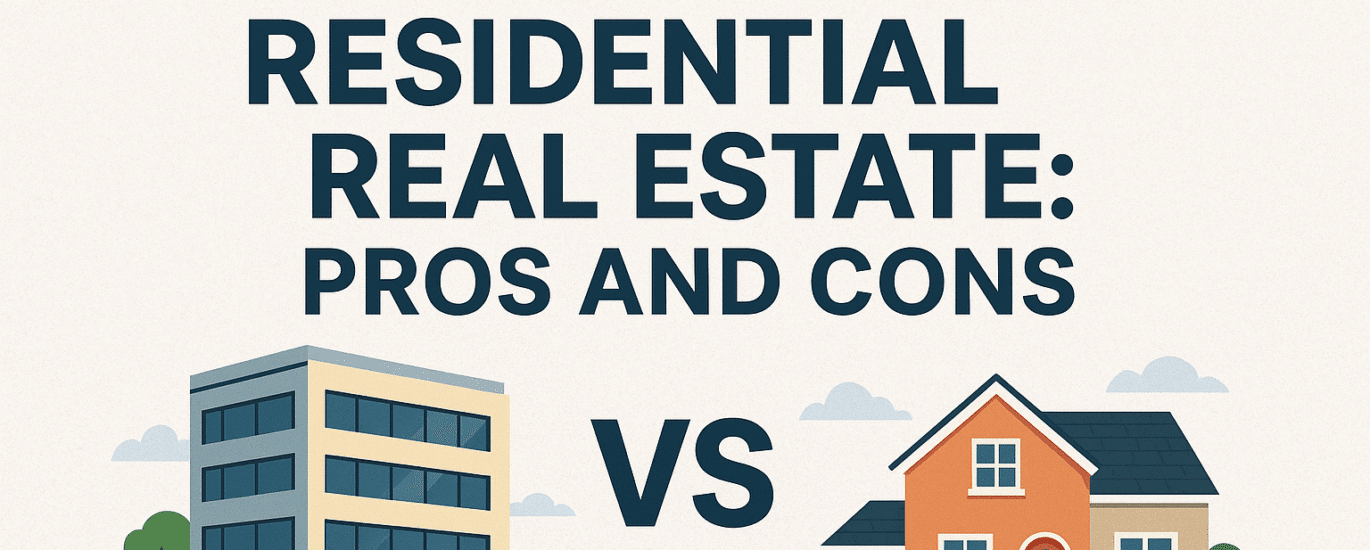
Commercial real estate and residential property are the two major avenues of real estate investment, each offering distinct opportunities, risks, and returns. For investors, choosing between the two can be a defining decision that shapes their long-term financial outcomes. While both have the potential to generate wealth, the differences in demand, income streams, and management responsibilities make it crucial to evaluate the pros and cons before making a commitment.
At Heptagon, we believe that understanding the nuances of real estate will help you make more informed investment choices. Below, we dive into their advantages and disadvantages to give you clarity on which path aligns with your financial goals.
The Pros of Commercial Real Estate
- Higher Income Potential
Commercial properties often yield higher rental income compared to residential properties. Businesses are typically willing to pay a premium for prime locations, resulting in a stronger return on investment. - Longer Lease Terms
Commercial leases tend to be longer, often ranging from 3 to 10 years. This provides investors with stability and predictable cash flow. - Professional Tenants
Unlike residential tenants, businesses are more likely to maintain the property professionally since it directly impacts their operations and brand image. - Value Appreciation
The value of Commercial property is often tied to the income it generates. If rental rates increase, so does the overall property value, offering strong appreciation potential.
The Cons of Commercial Real Estate
- Higher Initial Investment
Commercial properties generally require significant upfront capital, making them less accessible for first-time investors. - Complex Management
Owning Commercial property involves dealing with multiple tenants, zoning regulations, and specialized maintenance requirements. - Economic Sensitivity
Commercial spaces are highly dependent on business performance and the overall economy. During downturns, vacancies may increase, affecting returns.
The Pros of Residential Real Estate
- Lower Entry Costs
Residential properties are typically more affordable than Commercial properties, making them ideal for new investors. - Consistent Demand
Housing is always in demand, regardless of economic cycles. This creates a stable rental market with fewer drastic fluctuations. - Simpler Management
Managing a residential property is usually less complex, especially if it involves a single tenant. Property management companies can also simplify the process. - Easier Financing
Banks are generally more comfortable financing residential properties, offering flexible mortgage terms and lower interest rates.
The Cons of Residential Real Estate
- Lower Rental Yields
Compared to Commercial investments, rental income from residential properties is often modest, especially in competitive markets. - Shorter Lease Terms
Residential leases are typically short—usually one year—leading to more tenant turnover and potential vacancies. - Maintenance Responsibilities
Residential tenants may not maintain the property as well as commercial tenants, leaving landlords with frequent repair costs.
Conclusion
Both real estate come with their own set of advantages and challenges. While properties offer higher yields and long-term leases, they demand significant capital and management expertise. Residential properties, on the other hand, provide accessibility, easier financing, and steady demand, but with lower rental yields and more frequent tenant turnover.
At Heptagon, we guide investors through the complexities of real estate, ensuring every decision is aligned with financial objectives and market conditions. Whether you’re considering, our expertise can help you maximize your returns while minimizing risks.
✅ Ready to Make the Smart Move?
Explore our latest smart home listings or book a free consultation with a Heptagon advisor today. Let’s help you find a home that’s not just modern—but future-ready.
Call us: +971 50 203 5824
Email: info@heptagonproperties.com
Website: https://heptagonproperties.com
Check out our contracting company: https://charminardubai.com/
Follow us on Instagram | LinkedIn | YouTube | Facebook | Tiktok
Frequently Asked Questions (FAQs) Questions (FAQs)
Which is more profitable: Commercial or Residential real estate?
Commercial properties usually generate higher rental yields and long-term income, while residential properties offer steady demand and lower entry costs. Profitability depends on your investment strategy and risk appetite.
Is Commercial real estate riskier than Residential?
Yes, Commercial investments are more sensitive to economic shifts and require larger capital. However, they also offer longer lease terms and higher potential returns.
What is the biggest advantage of Residential real estate?
The key advantage is accessibility—residential properties are easier to finance, manage, and keep occupied due to constant housing demand.
Can I invest in both Commercial and Residential properties?
Absolutely. Many investors diversify across both to balance high income potential with consistent demand. This strategy reduces risks while maximizing opportunities.
How do I decide between Commercial and Residential investments?
Consider your budget, management capacity, and goals. If you seek higher returns and can manage complexity, Commercial may suit you. For affordability and simplicity, residential is the better option.