Table of Contents
Future trends in real estate are no longer just concepts—they are rapidly reshaping how properties are bought, sold, and managed. With advancements in virtual reality (VR), augmented reality (AR), and artificial intelligence (AI), the property market is entering an era where technology drives efficiency, personalization, and smarter decision-making.
Virtual Tours: Redefining Property Viewing
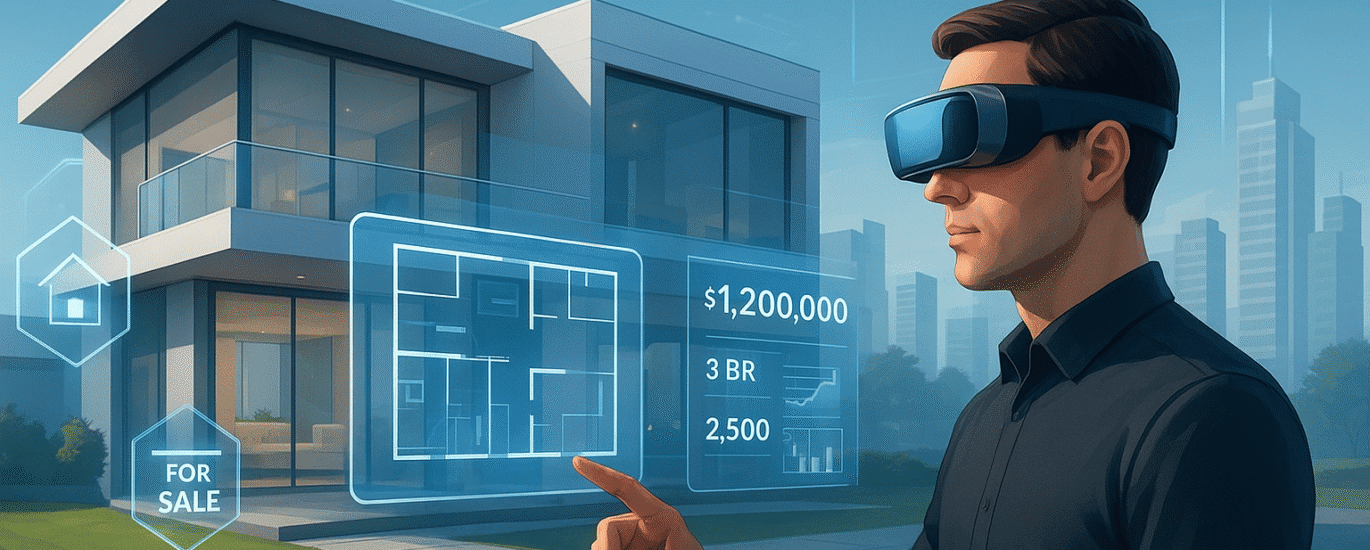
One of the most visible changes in the real estate industry is the adoption of virtual tours. Buyers no longer need to schedule multiple in-person visits to explore properties. Instead, 3D tours allow prospective homeowners and investors to navigate a property from anywhere in the world.
Virtual tours offer several benefits:
- Time efficiency: Buyers can shortlist properties without physically visiting them, saving significant time and travel costs.
- Enhanced engagement: Interactive features allow viewers to examine every corner of a home, from floor plans to finishes.
- Global reach: International buyers can explore properties without geographical limitations, expanding the market for sellers.
By integrating virtual tours into listings, real estate agents are not only improving client experience but also increasing the likelihood of faster sales. The future of property viewing is immersive, interactive, and instantly accessible.
AI Tools: Transforming Decision-Making
Artificial intelligence is another game-changer for the real estate sector. From predictive analytics to personalized recommendations, AI tools help both buyers and sellers make informed decisions.
For instance, AI can analyze market trends and forecast property value fluctuations. Investors can identify high-potential areas, while buyers can assess whether a property aligns with long-term financial goals.
AI also enhances customer experience through chatbots and virtual assistants, providing instant answers to inquiries, scheduling tours, and even guiding clients through paperwork. The result is a seamless, technology-driven process that saves time and reduces stress.
Personalized Marketing and Smart Matching
AI-powered platforms can match buyers with properties that meet their unique preferences. By analyzing user behavior, past interactions, and demographic data, these tools predict which listings will appeal most to a specific buyer.
This personalized approach benefits sellers as well. Properties are presented to genuinely interested buyers, improving lead quality and reducing time on the market.
Furthermore, virtual staging combined with AI allows sellers to showcase multiple design options, giving buyers a realistic sense of the property’s potential without any physical alterations.
Sustainability and Smart Homes
The future of real estate isn’t just digital—it’s also green. AI and IoT (Internet of Things) technologies enable smart homes with energy-efficient systems, automated climate control, and intelligent security solutions.
Buyers increasingly prioritize sustainability, and smart homes provide real-time monitoring of energy usage, helping homeowners reduce costs and environmental impact. Integrating these technologies into property listings increases appeal, making sustainability a key selling point in modern real estate.
Challenges and Considerations
While the integration of virtual tours and AI tools offers numerous advantages, there are challenges to consider:
- Data privacy: AI tools require access to user data, making privacy and security a top priority.
- Digital divide: Not all buyers or sellers may have access to the necessary technology or internet speed to fully utilize virtual tours.
- Human touch: Technology should enhance, not replace, the personal relationships that are crucial in real estate transactions.
Addressing these challenges ensures that the adoption of tech innovations is smooth and beneficial for all stakeholders.
Conclusion
The real estate industry’s future will be defined by seamless technology integration, enhanced user experience, and smarter decision-making. Virtual tours, AI tools, and smart home technologies are no longer optional—they are becoming essential components of the property market.
Agents and investors who embrace these innovations will not only stay competitive but also provide clients with unparalleled convenience and insight. The combination of immersive experiences and intelligent analytics marks a new era in real estate, where decisions are faster, more informed, and more satisfying for both buyers and sellers.
In conclusion, the future of real estate lies at the intersection of technology and human expertise. Virtual tours and AI tools are transforming how properties are marketed, viewed, and purchased, creating opportunities for a more efficient, personalized, and sustainable industry. Those who adapt early will lead the way in redefining property transactions in the digital age.
✅ Ready to Make the Smart Move?
Explore our latest smart home listings or book a free consultation with a Heptagon advisor today. Let’s help you find a home that’s not just modern—but future-ready.
Call us: +971 50 203 5824
Email: info@heptagonproperties.com
Website: https://heptagonproperties.com
Check out our contracting company: https://charminardubai.com/
Follow us on Instagram | LinkedIn | YouTube | Facebook | Tiktok
Frequently Asked Questions (FAQs) Questions (FAQs)
How are virtual tours changing the real estate industry?
Virtual tours allow buyers to explore properties remotely with 360-degree views and interactive walkthroughs. This saves time, reduces unnecessary site visits, and attracts international buyers.
What role do AI tools play in real estate?
AI tools analyze market data, predict property trends, personalize property recommendations, and even automate customer service through chatbots, making the buying and selling process more efficient.
Are virtual tours better than traditional property visits?
While virtual tours provide convenience and accessibility, they complement rather than replace traditional visits. Buyers often use them for initial research before final in-person inspections.
How do AI tools help investors?
AI tools can forecast property value appreciation, identify high-growth areas, and provide insights into rental yields, enabling investors to make data-driven decisions.
Are smart homes part of the future of real estate?
Yes, smart homes with AI-powered energy management, security, and automation features are increasingly in demand, as buyers seek both comfort and sustainability.